|
Female Agents of SOE
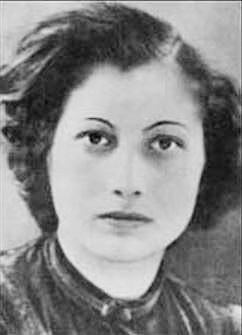
Noor-un-nisa Inayat Khan (SOE Agent)
1914-1944
Exotic British spy who defied Gestapo brutality to the end By Alan Hamilton.
The story of a prince’s daughter and the SS guard who tortured and shot her has been uncovered.
Noor-un-nisa Inayat Khan occupied “the principal and most dangerous post in France” until her capture and execution by the Nazis in 1944. Her diary identifies her prison-camp torturer. (THE KHAN FAMILY)
SHE was one of the most beautiful, exotic and unlikely spies to serve the Allies in wartime Europe. Like so many others, she perished at the hands of the SS in Dachau concentration camp.
Research in British and German archives has uncovered the full story of Noor-un-nisa Inayat Khan, who was born in pre-revolutionary Moscow to an Indian mystic prince and an American woman. She joined Britain’s Special Operations Executive and was betrayed with her radio as she transmitted from occupied Paris.
When her 225-page personal file was released recently by the National Archives in London, it was found to contain one extraordinary fact: the name of the SS camp guard who beat her to a pulp before shooting her through the back of the head. Yet she never betrayed a secret and died with the single word liberté on her bruised and bleeding lips.
One of only three wartime women to be awarded the George Cross, the highest decoration for gallantry away from the field of battle, Noor is the least known. Her fellow Resistance workers have been commemorated in feature films: Odette Hallowes was played by Anna Neagle in Odette and Violette Szabo by Virginia McKenna in Carve Her Name With Pride.
There have been books about Noor. New light has been shed on her short yet remarkable life in a Timewatch documentary.
In 1958, a former Dutch prisoner of the Nazis known as “A.F.” who witnessed Noor’s execution read her biography and wrote to its author, Jean Overton Fuller. He revealed her killer to be Wilhelm Ruppert, a sadistic SS guard at the camp, and he described Noor’s last moments on September 12, 1944.
“The SS undressed the girl and she was terribly beaten by Ruppert all over her body. She did not cry, neither said anything. When Ruppert got tired and the girl was a bloody mess he told her then he would shoot her. She had to kneel and the only word she said, before Ruppert shot her from behind through the head, was ‘liberté’.” She was 30 years old.
Even before her wartime service, Noor’s life was out of the ordinary. Descended from a Muslim prince who died resisting the British Raj, she spent her early childhood among the Tsarist nobility before the 1917 revolution forced her family to flee to France. When Paris fell to the Germans in 1940, they had to seek refuge again, this time in England.
Driven by ideals of freedom and calling herself Nora Baker, she volunteered for SOE, which specialised in dropping agents behind enemy lines. Trained at the secret Baker Street headquarters, she proved a poor recruit, being too clumsy, too emotional and too scared of handling weapons.
Bob Maloubier, another French refugee trained at Baker Street, sent home to become a successful saboteur and now aged 83, said yesterday: “Above all she was definitely a very brave lady. It was
extremely tricky operating under the noses of the Germans.”
Noor’s courage and determination outweighed her ineptitude, and her masters sent her into France with a radio set and the codename Madeleine on June 16, 1943.
From the start she was on the run, moving her radio all over Paris to transmit details of troop movements essential for the planning of the D-Day invasion. The Prosper underground network of which she was a vital link was quickly penetrated by the Germans, thanks to an SOE double agent, Henri D. She was ordered home, but declined to board the RAF Lysander sent for her and carried on transmitting as virtually the last link between the Resistance and London.
General Sir Colin Gubbins, the head of SOE, said that she occupied “the principal and most dangerous post in France”. She had remarkable luck; stopped by the Gestapo as she cycled with her radio, she persuaded them that it was a cine projector. But after 3½ months her luck ran out; she was betrayed by Renée Garry, the sister of one of her Resistance colleagues. Garry is thought to have been jealous of her role as an SOE agent.
When captured, Noor was carrying a codebook listing all her radio messages, sent and received, which allowed the Germans to send false messages to London for a time. But after the war the former head of the Gestapo in Paris said that despite interrogation and torture, Noor never told them a thing.
She had been dead eight years when her nephew, David Harper, was born, but from endless family chatter he feels as if he knew her. “She was a paradox. She was sensitive, a lover of music and poetry, a musician and writer of children’s stories. Yet she was terribly strong-willed and prepared to risk her life for a cause; she was fighting for an ideal, like so many others at that time,” he said. SS Trooper Wilhelm Ruppert was tried for war crimes and executed by the Americans on May 29, 1946.
|

 (289) 828-5529